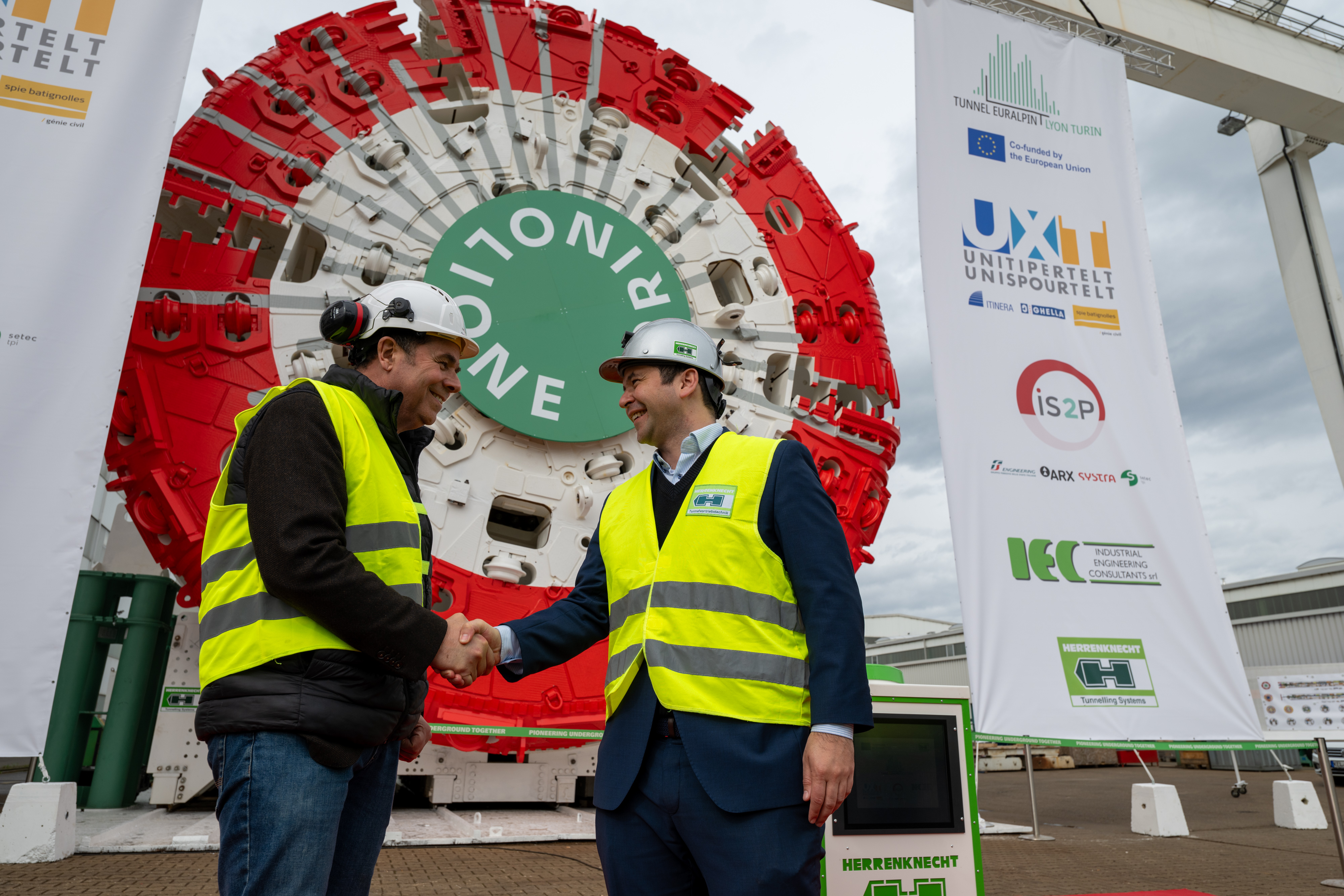


Lyon - Turin: first TBM for the Base Tunnel Excavation in Italy unveiled
03-11-2026
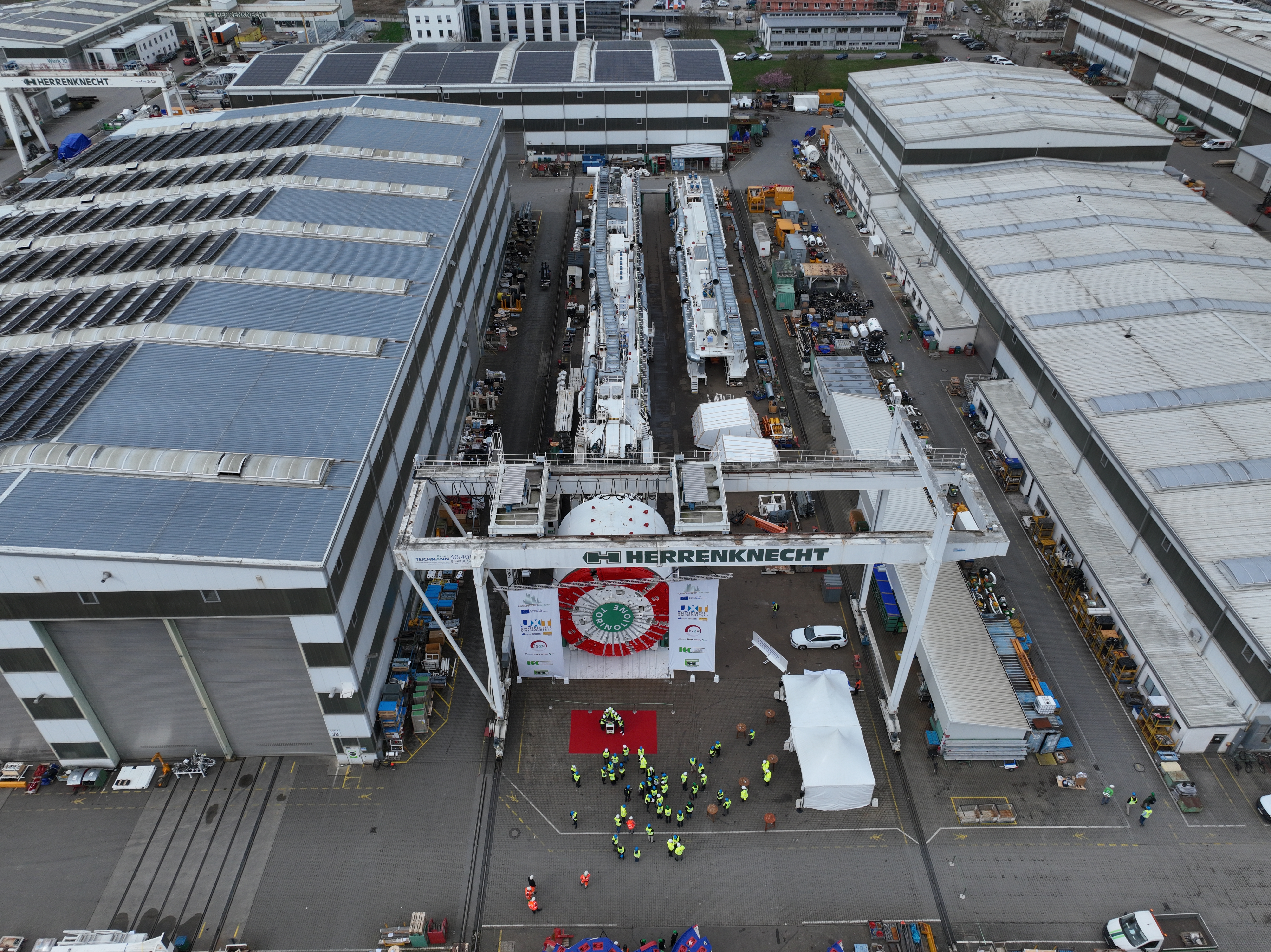
The gigantic machine, 235 metres long, was delivered at the Herrenknecht factory in Germany and will now be transferred to the construction site in Chiomonte, in the Susa Valley.
Schwanau (Germany), 11 March 2026 – As long as two football fields, weighing thousands of tonnes and designed to excavate through a variety of geological conditions with rock cover reaching up to 2,000 metres. The first of two giant tunnel boring machines (TBMs) destined for the Italian side of the Mont Cenis Base Tunnel – the core of the future Turin–Lyon railway line – was officially delivered today at the Herrenknecht plant in Germany, where it was built for the UXT consortium (Itinera, Ghella and Spie Batignolles).
The TBM is destined for the Chiomonte construction site in the Susa Valley, where it will excavate the second access tunnel before continuing with the excavation of the south tube of the base tunnel, already underway on the French side, advancing beneath the mountain as far as Susa. At peak operations in the coming years, seven TBMs will be in operation, carrying out 75% of the base tunnel excavation works in Italy and France.
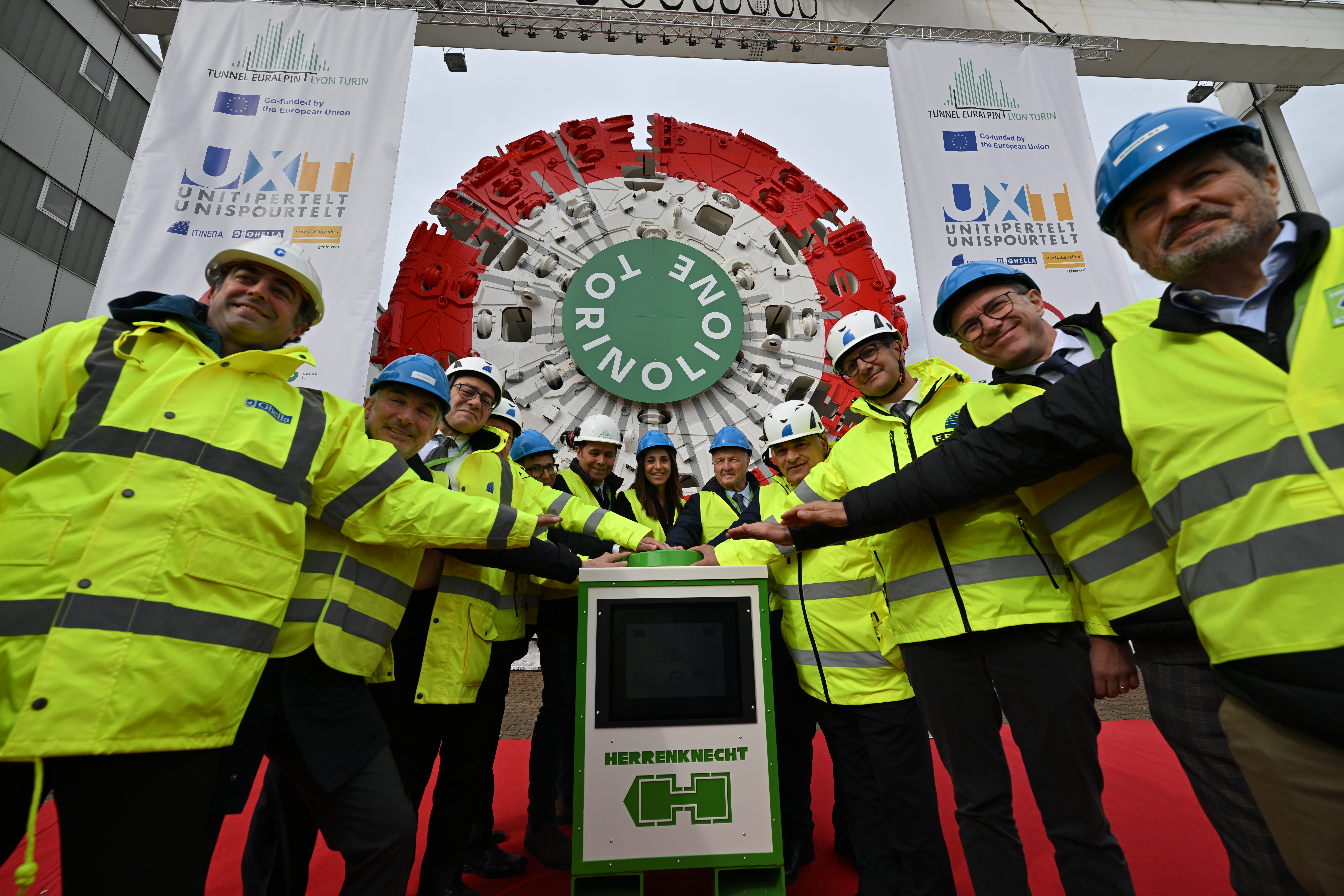
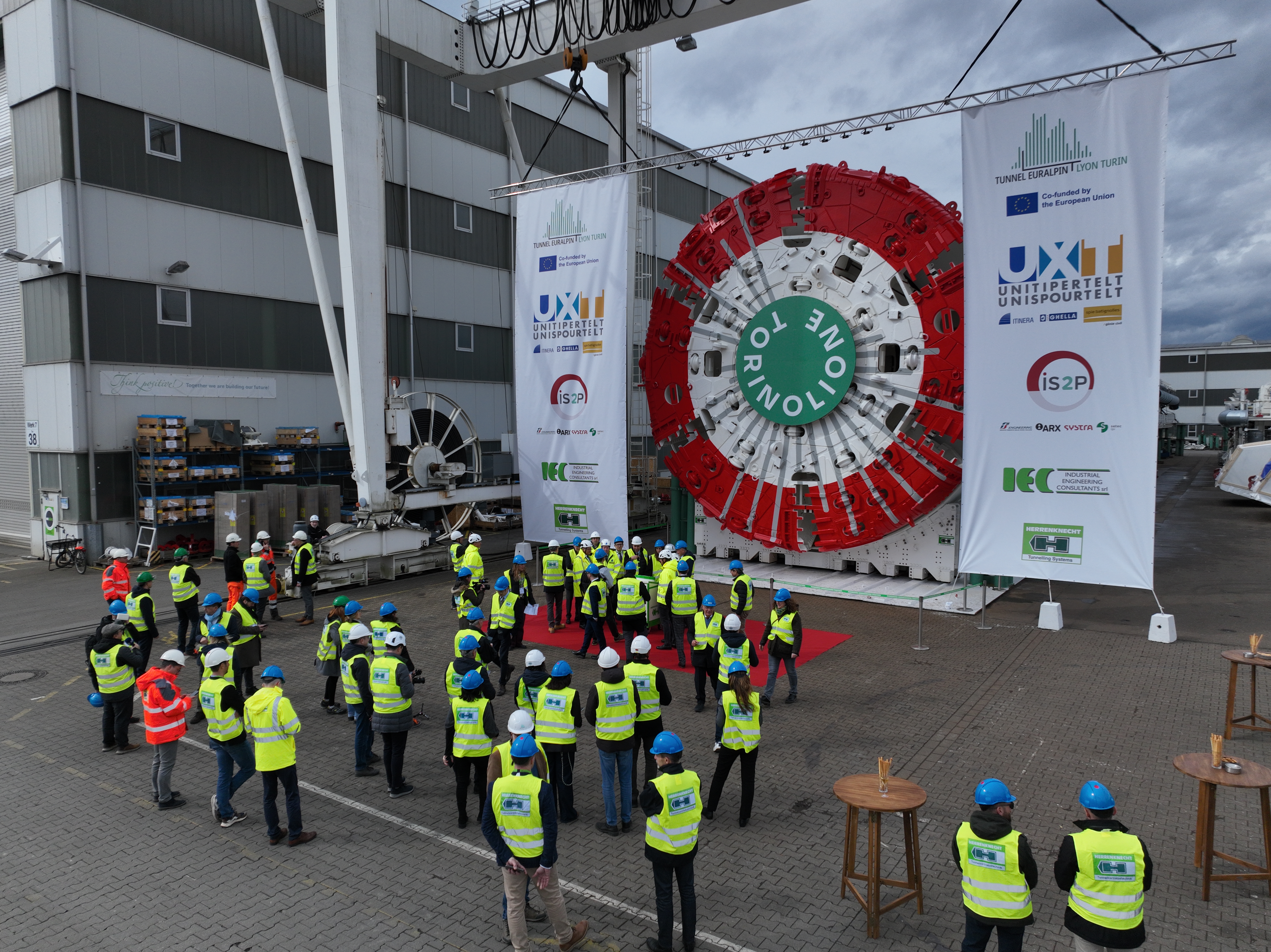
The delivery ceremony, marked by the rotation of the TBM cutterhead, was attended by Daniel Bursaux, Chairman, and Maurizio Bufalini, CEO of TELT – the binational Italian-French company responsible for the construction and future management of the cross-border section of the Turin–Lyon line – representatives of the UXT consortium, and the construction supervision consortium IS2P (FS Engineering, ARX, Systra, Setec). Also present were Pietro Falcone, Italian Consul in Freiburg, and Elena Chiorino, Vice-President of the Piedmont Region. Remote speeches were delivered by Matteo Salvini, Italian Deputy Prime Minister and Minister of Infrastructure and Transport, and Philippe Tabarot, French Minister of Transport.
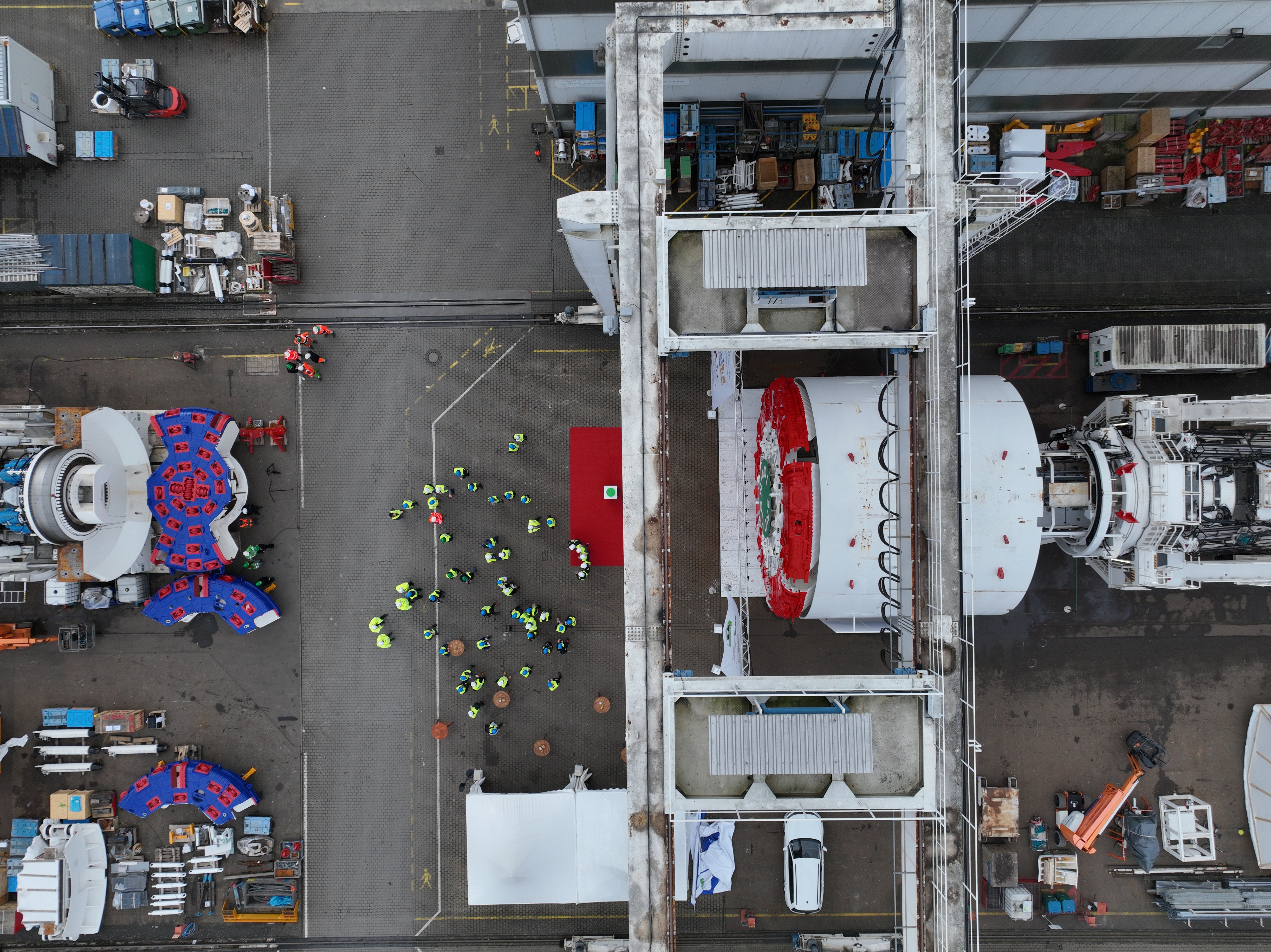
The TBM has a total length of 235 metres and consists of a cutterhead with a diameter of 10.16 metres and an external shield that protects both workers and the machine during excavation, allowing the safe installation of the prefabricated concrete segments that form the tunnel lining.
The TBM is equipped with 13 motors capable of generating a total power output of 4,550 kW and will advance approximately 10 metres per day by means of hydraulic cylinders that push against the installed segments. This TBM ensures steady and consistent progress throughout the tunnel, regardless of ground quality.
To meet the specific requirements of this section of the tunnel, a dual-mode TBM has been designed, capable of operating both in hard rock, in open mode, and in water-bearing loose ground, in closed mode.
In closed-mode excavation, the excavated material is removed using a closed slurry circuit instead of a conveyor belt. This system includes a crusher that reduces the size of the excavated rock and a pipeline that transports a mixture of water, bentonite and crushed material to the surface.
To deal with these excavation conditions, the TBM is also equipped with a hyperbaric compression/decompression chamber, to enable human intervention in pressurised environments when necessary, as well as a pressurised shuttle system that allows personnel to exit safely and undergo gradual decompression during longer interventions without interrupting normal construction activities.
Excavating Deep Beneath the Mountain
The choice of this type of TBM is due to several factors: the geology of the excavation zones, the great depth of the tunnels to be built (up to 2,000 metres beneath the mountain), the need to follow tight horizontal and vertical curvature radiuses, and the high natural temperatures encountered at these depths. These conditions were identified through the exploratory Maddalena tunnel in Chiomonte, which made it possible to design and size this new TBM accordingly.
The CO3/4 Construction Site
Chiomonte is the main Italian construction site for the cross-border section. Since 2012 it has been designated a site of strategic national interest and represents the access point for the excavation works of the Mont Cenis Base Tunnel in Italy. Approximately 30 kilometres of excavation are planned at the site, using both traditional methods and two dual-mode TBMs. In addition to the two tubes of the base tunnel, works include the construction of the Maddalena 2 decline, connecting branches between the two tunnel tubes, the underground safety site at Clarea, and the artificial tunnel at the eastern portal in Susa. Preparatory activities for the arrival of the TBM are currently underway at the site. In January, works were completed on the new construction site interchange that allows the transport of equipment and materials via the A32 motorway (a project carried out under delegated contracting by Sitaf). Construction has also begun on the retaining wall system (known technically as a Berlin wall), which will be followed by the lowering of the existing yard area and the start of approximately 160 metres of traditional excavation for the Maddalena 2 tunnel, from which the TBM will then be launched. The TBM will now be dismantled and later transported to Chiomonte. There, the cutterhead and motor section will be reassembled in the yard before beginning its descent into the mountain in 2027, where it will excavate approximately 10 kilometres of tunnel towards Susa. At peak activity, around 700 people will be employed on this construction site.
Construction Progress
The construction of the cross-border section of the new Turin–Lyon railway line – 65 km between Susa and Saint-Jean-de-Maurienne – is progressing both above ground and underground, in Italy and France, with more than 3,300 people currently at work. This complex infrastructure consists of two parallel railway tunnels, four access declines, and 204 safety cross-passages. As of 28 February 2026, more than 47 km of tunnels have been excavated, including over 20 km of the base tunnel, representing approximately 29% of the 164 km of tunnels planned for the project.